
“Every Action Is A Grain of Sand”
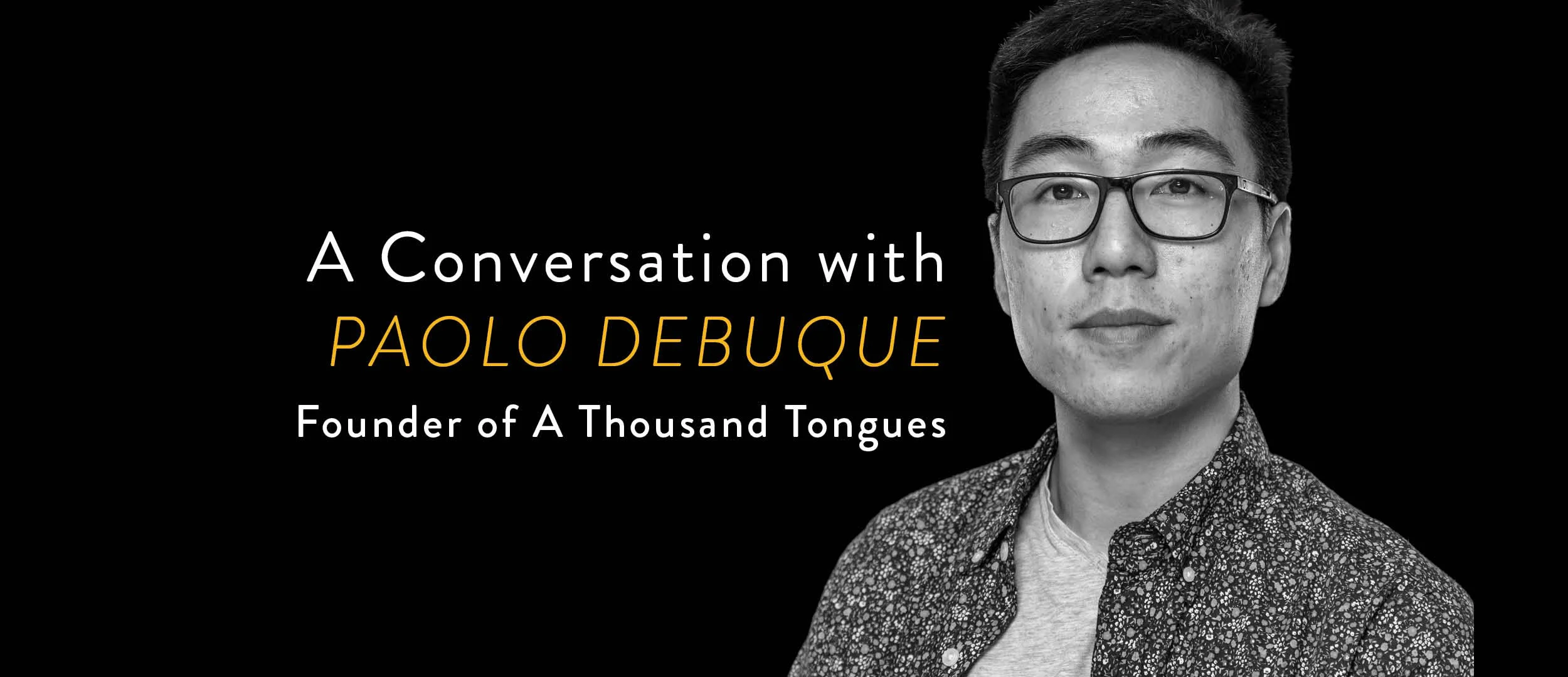
A conversation with Paolo Debuque on
A Grain of Sand, Revisited
This Sunday, June 7 at 2:00 pm, join us as Paolo Debuque, Adrianna Tam, and Shohei Kobayashi lead A Grain of Sand, Revisited, a concert tracing Asian American history and activism through music, memory, and story.
We are deeply grateful to Paolo Debuque for taking the time to sit with us in the final stretch of preparation for this concert and for sharing his reflections so generously.
Can you share what A Thousand Tongues is and how it started?
PD: A Thousand Tongues grew pretty organically out of programming I was doing with friends in Minneapolis. I was working at a church in the suburbs, and we put together a month of AAPI Heritage Month programming where we invited artists in over several Sundays to bring music rooted in their own experience and work with the choir.
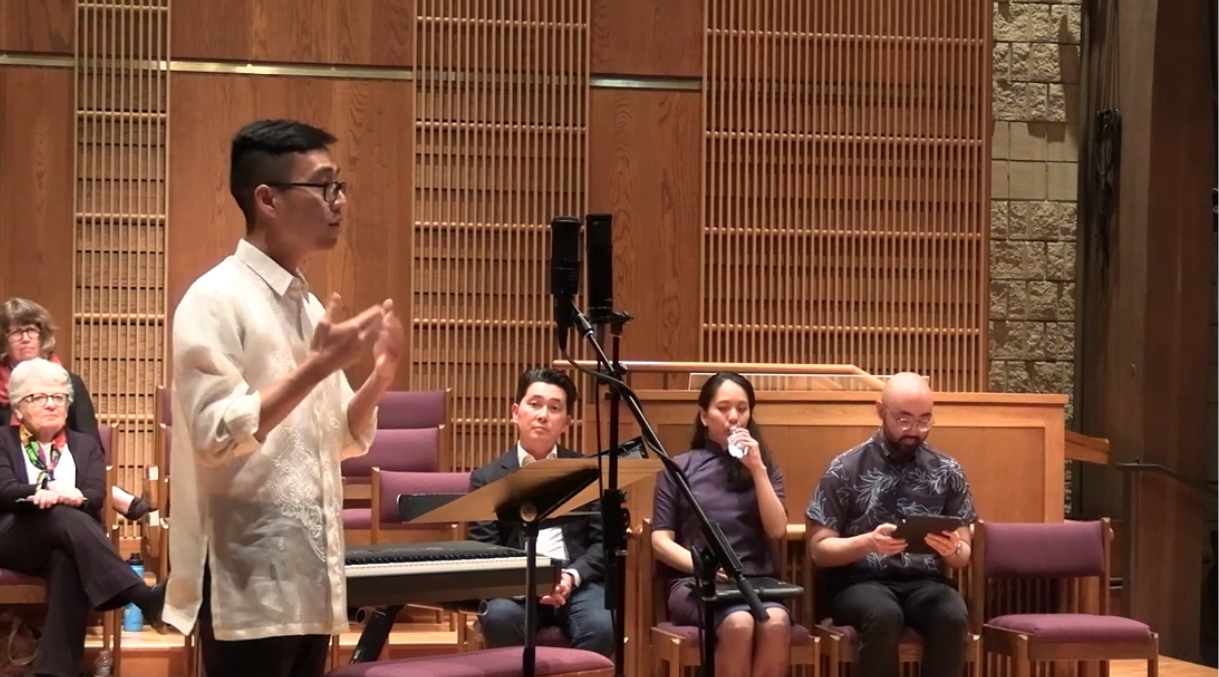
Paolo speaks between pieces at an A Thousand Tongues program.
What was important to me in designing this programming wasn't just representing identities or demographics, but giving the artists the space to define themselves on their own terms inside that space. I had always felt a tension with how identity programming can become prescriptive, how it starts to suggest what a particular identity should look or sound like. One moment that really stayed with me was a friend being asked to write a piece for a mental health program, and then being told afterward to make it sound “more mentalhealth-y.” That kind of framing just felt completely backwards to me.
So A Thousand Tongues really grew from wanting to resist that impulse. When working with artists, our conversations start with prompts like “reflect on your identity (ethnic and otherwise), and let’s find the music that feels most important or relevant to you.” The idea is to create space where people can bring their own experience forward in whatever language that takes.
What does “Asian American identity” mean to you?
PD: For a long time, I didn’t feel like I could fully claim space as an advocate. I didn’t feel “Asian enough”—I don’t speak either of my parents’ languages, I don’t have deep ongoing connections to what people might think of as the motherland, and I carried a lot of ideas about what I lacked.
What I’ve learned is that there isn’t a single thing that Asian American identity should be. Every experience I have is an Asian American experience. The more I’ve been able to let go of that pressure to define it narrowly, the more I’ve been able to actually see the shared threads in all of it.
What drew you to A Grain of Sand?
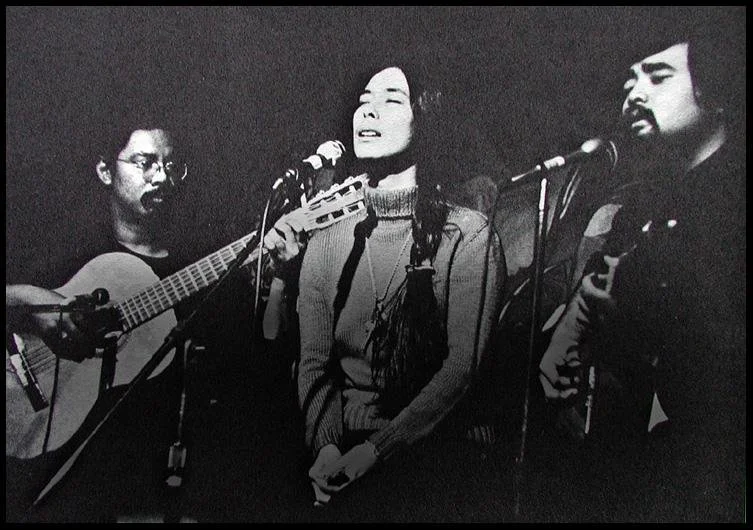
Folk trio Chris Kando Iijima, Nobuko Miyamot, and William "Charlie" Chin
PD: What struck me first about the music on this album is how immediately it still resonates. The specifics are different now, but the way oppression operates, the way systems hold power, the way people are pushed to the margins—it’s all still recognizably here.
It could have been written yesterday. It could be written fifty years from now. And at the same time, there’s something in it that carries a sense of possibility. When I first worked on it with Shohei and Adrianna, there was something about singing it together that made it feel less like looking back and more like something active—something we were still inside of.
It didn’t feel like an archive. It felt like a conversation we were stepping into.
What is it like working with Shohei and Adrianna on this project?
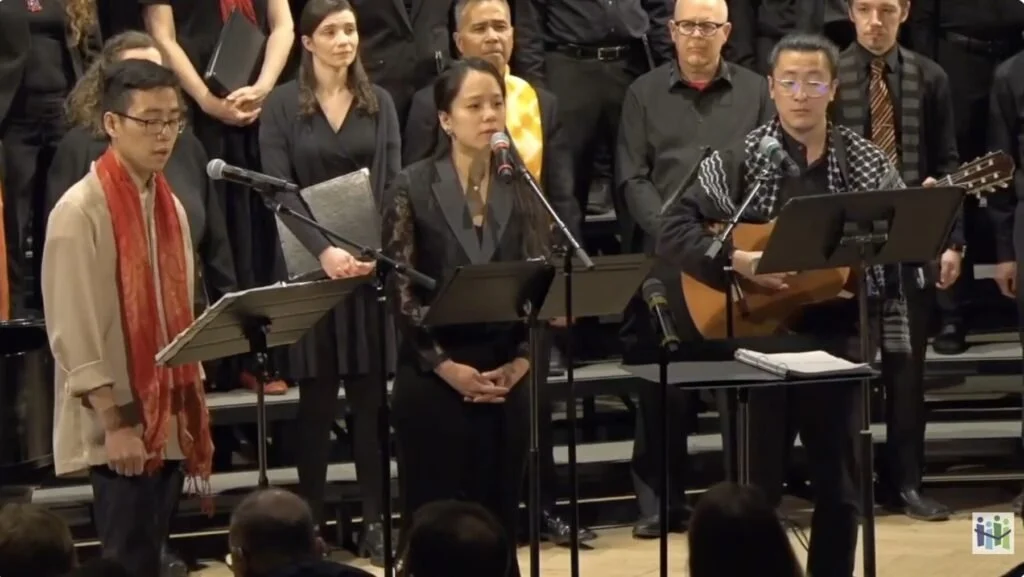
Paolo, Adrianna, and Shohei with Minnesota Chorale
PD: It’s honestly one of the most meaningful parts of the whole thing for me. There’s something about the three of us doing this work together that mirrors the original trio in A Grain of Sand. It’s not something we planned in a symbolic way, but it’s something we feel in the room. There’s a kind of alignment between friendship, trust, and interpretation that makes the music feel really alive.
We’ve worked on this across different places and versions of the program, and it’s been this ongoing process of returning to it together, adjusting it, sitting inside it again. It keeps changing because we keep changing.
Can you talk about the idea behind the title A Grain of Sand?
PD: There’s a story about a man trying to move a mountain one grain of sand at a time. The idea is that the mountain is only ever made of grains of sand, and each one removed is part of a longer, collective process that continues beyond any single person.
This concert is another grain of sand. Every action we take against systems of oppression is another grain of sand. It’s not about scale in a single moment—it’s about what accumulates over time, and what gets made possible because of that persistence.
Are there any pieces on the program that are especially important to you?
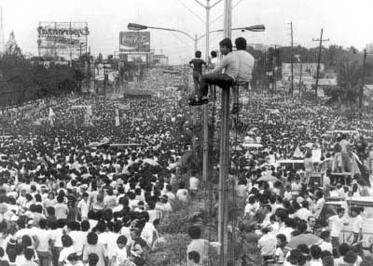
Hundreds of thousands of people filling up Epifanio de los Santos Avenue during the People Power Revolution
PD: We are performing a piece called BAYAN KO 2.0 by Nilo Alcala. My dad marched in the People Power Revolution in the Philippines, and every night people would come out into the streets and sing “Bayan Ko” together. It’s one of those songs that carries a very direct line to lived history for me.
At one point, I questioned whether it was really mine to sing, or whether I was overstepping something by continuing to perform it so I stopped singing it.
But people in my community pushed back on that. They said, you need to sing Bayan Ko.
Whenever I sing or conduct the song, I can look out and see members of my Filipino community singing along, closing their eyes, tearing up, sometimes all at the same time. It feels less like performing something from the past and more like carrying something forward on behalf of my people.
What do you hope audiences leave Sunday’s Concert with?
PD: I don’t think it’s about leaving with a specific idea or takeaway. I hope people leave feeling connected to what happened in the room, and maybe a little more open, more curious in a way that they weren’t before.
A lot of the time, change doesn’t start with understanding something new in a purely intellectual way. It starts with feeling like you’re part of something larger than yourself. That feeling can be subtle, but it stays with you.
EXPERIENCE A GRAIN OF SAND, REVISITED LIVE THIS SUNDAY!
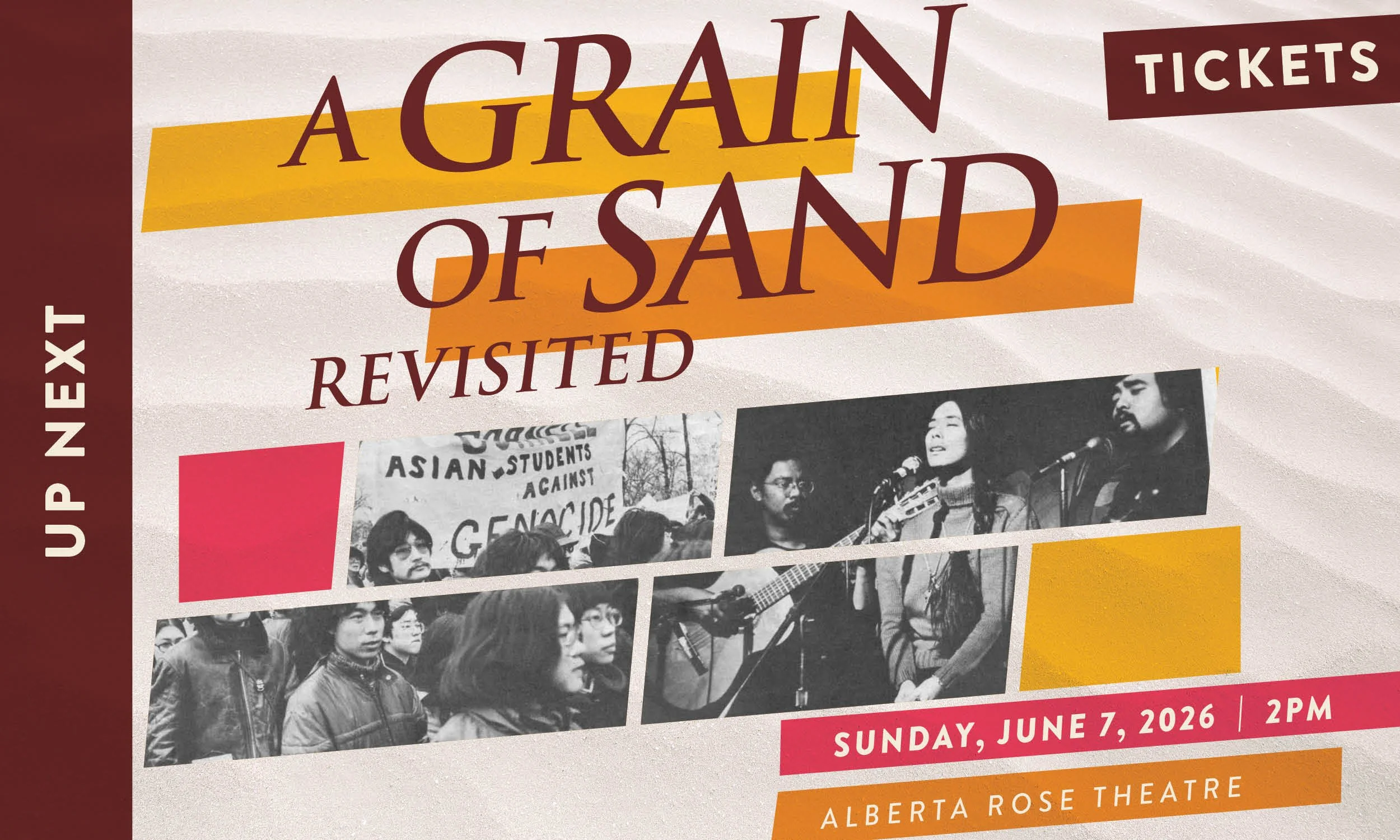
A GRAIN OF SAND, REVISITED
Sunday, June 7 | 2pm
@Alberta Rose Theatre
Join us after the program for a special post-concert panel with Paolo, Adrianna, Shohei, and Resonance Ensemble Artistic Director Katherine FitzGibbon!